
Gut Health and Immunity
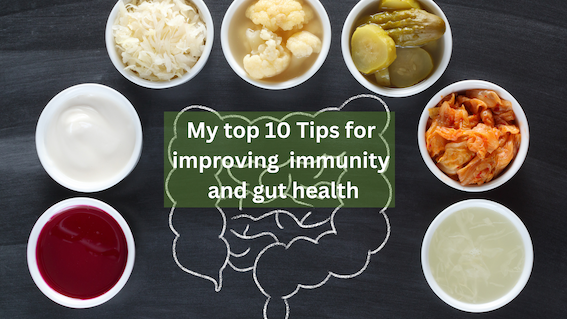
With so many coughs and flu infections this winter, I thought it might be useful to go over how to improve your immunity.
Your microbiome is a community of living organisms that live across your body. We have communities in every organ including the gut, the brain, our skin and even our teeth. It controls all aspects of our wellbeing, particularly (but limited to) our immunity.
When covid came along, it was found that people with gut dysbiosis* were more likely to have a negative reaction to the covid vaccine. They also had a harder time recovering from covid-19. But with about 70% of your immune system located around the gut, this was not really a surprise to the medical community.
How to improve your gut health and therefore your immunity
Improving gut health is not as simple as taking a probiotic and be done with it (although that does help). You need overall self-care and ownership of your own health: try not to look for a pill that will instantly sort out your gut. It doesn’t exist.
What we are looking for, for overall good physical and mental health, is a nice diverse gut. The more strains of beneficial bacteria you have, the more likely it is you are healthy, happy and disease free.
So how do you improve gut diversity?
Do these things
- Make sure you are eating enough fibre every day (vegetables, whole grains, fruits, beans, nuts, seeds and legumes are all great sources of fibre). Women need 25-30g and men 30-35g. Gut bacteria thrive on fibre which improves your immune system and strengthens your gut wall.
- Eat as much variety as possible with very colourful plates of food. We want to have as many colours of food as possible on each plate of food. Each colour represents a different polyphenol. We know that polyphenols stimulate the growth of beneficial bacteria and inhibit the growth of pathogen bacteria, giving prebiotic-like effects.
- Eat at least 2-3 portions of pre-biotic foods a day. These include: dark green leafy vegetables, oats, rye, quinoa, wheat, potatoes, yams, asparagus, onions (raw or cooked), berries, garlic, leeks, artichokes, fennel, ginger, apples, bananas, berries, citrus, kiwi, flax seeds, chia seeds, beans, honey and agave.
- Eat probiotics every day and try to vary which probiotic foods you eat each day. These include: certain yoghurts (dairy/coconut/soy), kefir is a particularly great probiotic as it contains so many strains, fermented products: pickles, bacterially fermented cheeses, kimchi, miso, tempeh, soy sauce, wine, yeasts, moulds and fungi, mould-enhanced cheese like blue cheese and sauerkraut.
- Keep your blood sugars as constant as possible. i.e., avoid starchy and sugary foods that spike your blood sugars. High blood sugars promote overgrowth of microbes. The American Diabetes Association found that the primary driver of diabetes and obesity is intestinal permeability (a.k.a. leaky gut – see other post).
- Do regular exercise. Good circulation is essential for good immune function
Avoid these things
- Stress. The vagus nerve connects the brain to the gut and they communicate with each other constantly. When one is unhappy, so is the other. Stress and stressful thoughts are potentially inflammatory in the gut. It also suppresses the production of the microbes that we want.
- Ultra-processed foods as they have been shown to lead to poor gut health.
- Pesticides as much as possible. They are designed to kill bacteria, but are indiscriminate on which bacteria they kill and kill the good stuff too.
- Inflammatory foods: non organic/grass fed meat, sugars and artificial sweeteners, caffeine, grains and gluten, corn, dairy, processed foods and vegetable oils, trans fats and alcohol.
Take on these rules for a long healthy, happy and disease free life with kick-ass immunity! 🙂
Most of these rules are part of my 21 Day Reset. So if you'd like some help knowing what to eat, join me for my next one. You can start the current one up until 9th January 2023. But if you are reading this after that date, then take a look and see when my next one is running (3-4 times a year).
• Gut Dysbiosis = when someone has more bad bacteria (pathogens) than beneficial bacteria in the gut.