A Simplified Guide To Prebiotics and Probiotics
Have you every wondered what the difference is between prebiotics and probiotics? Here is a simplified explanation of what happens in our bodies and why we need both prebiotics and probiotics in our diets.
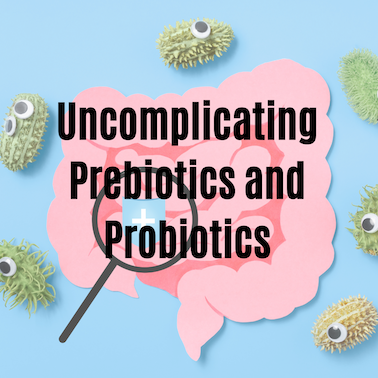
What is the difference between Prebiotics and Probiotics?

What are bacteria?
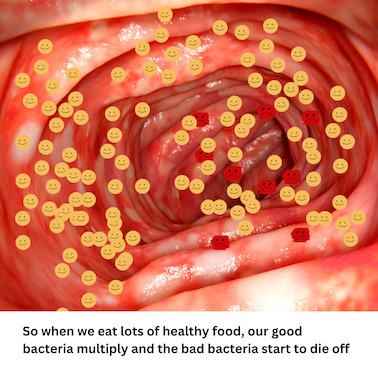
This picture is inside your large intestine in your gut where most of your bacteria live.
Your gut contains trillions of bacteria (please note they are much smaller than I have illustrated in this picture). I have chosen a picture of the gut to show you as 90% of our bacteria live there, but bacterial colonies are also found throughout the entire body including the skin, inside the nose, in the throat, mouth and vagina.
These bacteria have a symbiotic relationship with their host (you!). That means, they are living and cannot live without you. Likewise, you cannot live without them. They influence nearly every factor of human health: physiology, mental health, metabolism, nutrition and immune function have all been clearly linked with these bacteria.

What bacteria eat
Remember that these bacteria are living. They therefore need to eat food to survive. And much like humans they like to eat different foods depending on who they are.
Prebiotic is a type of fibre (but not all fibre is prebiotic). To be classified as a prebiotic, the fibre must pass through the GI tract undigested and stimulate the growth and/or activity of certain ‘good’ bacteria in the large intestine.
Prebiotic Foods Include: chicory, Jerusalem artichokes, garlic, onions, shallots, spring onions, leeks, savoy cabbage, chickpeas, lentils, beans, soybeans, bananas, apples, watermelon, grapefruit, oats, nuts, seeds, mushrooms, asparagus, cocoa powder and flaxseed.
What happens in the gut when prebiotics are eaten
So when the good bacteria get to eat their favourite foods, they have babies and multiply. Their numbers become much larger and as a result they start to drown out and kill of the pathogens. And then this improves the health of the host. The human will be feeling good.
Please note that the more variety of food these good bacteria eat, the more they will multiply. Variety really is the spice of life!

What happens in the gut when junk food is eaten
Food high in saturated fats, food covered in pesticides and other chemicals, sugar, artificial sweeteners, processed foods are all foods that your pathogens love to eat or that kill off good bacteria. And when they get fed this food, the pathogens multiply...

What are Probiotic Foods?
Probiotic foods contain live bacteria in them. So when you eat them, you are eating the live bacteria and that bacteria gets transferred into your body. There is some argument that the high temperatures in our digestive system mean that the bacteria will die. But there is sufficient evidence that some get through and make a difference. And when fat is eaten with the probiotic, the fat can protect the bacteria as it travels on it's journey. That is why yoghurts are such good probiotics.
Examples of probiotic foods are: apple cider vinegar with mother, unpasteurised cheese, live yoghurt/buttermilk from grass-fed animals, raw milk, miso, kefir, kimchi, pickled gherkins, sourdough bread, soy sauce, tempeh, kombucha, sauerkraut, paneer Indian cheese, natto, peas and apples.
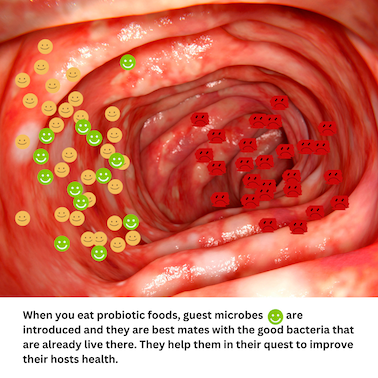
What happens in the gut to the probiotic bacteria?
The probiotic bacteria go and live alongside the good bacteria and help them with all their functions to make their human healthy. They essentially help make up the numbers on the 'good' side to drown out the pathogens.
There are lots of strains of probiotic bacteria. Each strain has a slightly different job in terms of human health. So you want to eat a variety of different probiotic strains daily for maximum health benefits.

In Summary
- Eat a wide variety of prebiotic foods and drinks
- Eat a wide variety of probiotic foods and drinks
- Make sure you eat pre and probiotic foods and drinks every day
- Avoid junk and processed foods
Then you will be happy, healthy and wise 🙂
My 21 Day Reset programme helps you to improve the health of your gut microbiome. Find out more here including the dates of my next group programme to help you get moral support along the way and testimonials of joined me before.